
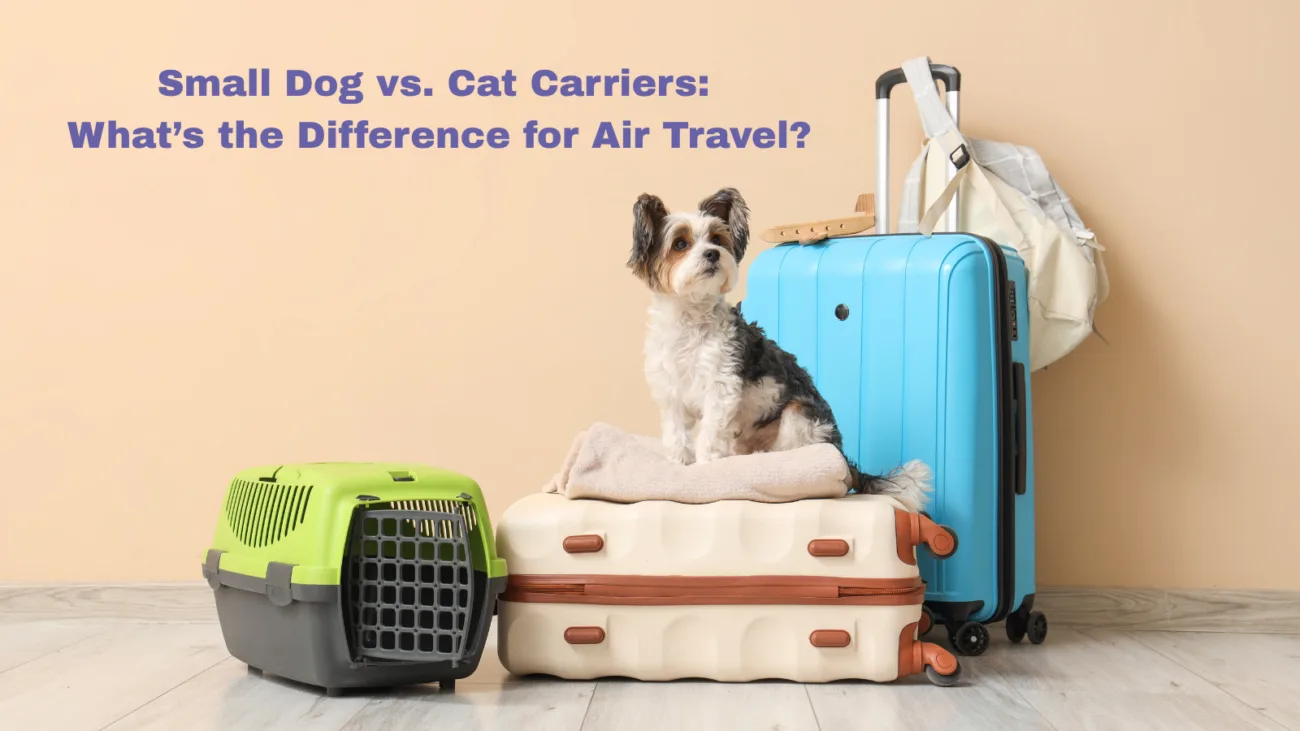
Walk into any pet store, and you will likely see an aisle labeled “Pet Carriers.” It seems simple enough: a mesh box is a mesh box, right? Whether you have a Chihuahua or a Tabby, the airline rules are the same.
However, experienced pet travelers know that pet carriers for small dogs and airline approved cat carriers serve two very different masters.
While a dog might view a travel day as a grand adventure to be watched, a cat often views it as a terrifying vulnerability. These behavioral differences mean that the features making a carrier “perfect” for a dog might make it a nightmare for a cat.
In this guide, we break down the critical differences between the two, helping you choose the right small pet travel carrier that respects your pet’s instincts and keeps them calm at 30,000 feet.
1. Visibility vs. Privacy: The Biggest Difference
The most significant difference lies in the mesh design.
For Dogs: “I Want to See You!”
Dogs are pack animals. When they are in a strange environment (like a loud airport), their source of comfort is you.
Ideal Design: Pet carriers for small dogs should have maximum mesh visibility on 3 or 4 sides.
Why: If a dog can’t see their owner, they are more likely to whine or bark. High-visibility mesh allows them to keep eyes on you, reducing separation anxiety.
For Cats: “I Want to Hide!”
Cats are both predators and prey. In stressful situations, their instinct is to hide and become invisible.
Ideal Design: The best airline approved cat carriers feature “privacy mesh” (thicker or darker) or roll-down flaps.
Why: A carrier with too much open visibility can make a cat feel exposed and vulnerable. A “cave-like” environment helps them feel secure. If you use a high-visibility dog carrier for a cat, consider throwing a light blanket over the top.
2. Security: The “Houdini” Factor
All pets need to be secure, but cats are the masters of escape.
The Zipper Lock Necessity
A determined dog might scratch at the door, but they rarely manipulate the zipper pull itself. A cat, however, can work a zipper open with a single claw.
Cat Carrier Requirement: You must look for locking zippers (where the pull tab locks flat) or zippers that have clips to clasp them together.
Dog Carrier Requirement: While helpful, locking zippers are less critical for pet carriers for small dogs unless your dog is an extreme escape artist.
Mesh Strength
Cats have sharp, retractable claws designed for tearing. A soft pet carrier for a cat needs heavy-duty, resin-coated mesh. A standard “mosquito net” style mesh found on cheap carriers will be shredded by a panicked cat in minutes.
3. Loading Mechanisms: Top vs. Side
How you get your pet into the bag matters, especially during the TSA security check where you have to take them out and put them back in.
Top-Loading (Crucial for Cats)
Cats are liquid. Trying to shove a spreading cat into a side door is a battle you will lose.
The Cat Strategy: A top-loading carrier allows you to lower the cat in from above. Gravity is your friend. It is faster, safer, and less stressful for everyone.
Side-Loading (Fine for Dogs)
Many small pet travel carrier models for dogs rely on side doors.
The Dog Strategy: You can often lure a dog into a side door with a treat, or they might even walk in voluntarily if trained. Top-loading is a bonus for dogs, but essential for cats.
4. Shape and Structure
The “Curling” Dog
Dogs typically circle and curl up to sleep. They need a carrier with a wide enough base to perform this ritual. Rectangular, boxy shapes work best for pet carriers for small dogs.
The “Loafing” Cat
Cats often “loaf” (tuck paws under) or crouch. They can be comfortable in carriers that are slightly more tapered at the top (trapezoid shape), which fits better under airline seats. However, verify the airline approved cat carriers still allow them to stand up and turn around, as per airline rules.
5. Universal Needs: What Both Need
Despite the differences, some features are non-negotiable for both:
Airline Compliance: Whether it’s for a cat or dog, it must fit the 18x14x8 small pet travel carrier general dimensions.
Washable Liner: Nervous accidents happen to both species. Ensure the fleece bed is removable.
Safety Tether: Always clip the internal tether to a harness (never a collar) to prevent a dash for freedom when the door is opened.
Respect Their Instincts
When shopping, don’t just look for “cute.” Look for “biology.”
By choosing a small pet travel carrier that caters to your pet’s specific instincts — privacy for the cat, visibility for the dog — you are taking the first step towards a peaceful flight.
For the Dog Owner: Look for airflow, view, and space. Prioritize pet carriers for small dogs with wide mesh panels and a roomy rectangular base.
For the Cat Owner: Look for security, privacy, and top-loading access. Only trust airline approved cat carriers with locking zippers and reinforced mesh.
FAQ: Choosing Between Cat and Dog Carriers
Q: Can I use a dog carrier for my cat?
Physically, yes. But you must ensure it has secure zippers. If it’s a high-visibility mesh bag, we recommend draping a jacket over it during travel to give your cat the privacy they crave.
Q: Do airlines charge differently for cats vs. dogs?
No. The “Pet in Cabin” fee (usually $95–$125 one way) is the same regardless of species.
Q: Which is the best airline pet carrier for a heavy cat?
Large male cats (like Maine Coons) can weigh 15–20 lbs. Look for a large soft pet carriers for small dogs-style carrier with a rigid base frame so the floor doesn’t sag under their weight — the same structural principles apply for heavy cats.